New here? Get a free printable pack when you join — delivered to your inbox in minutes.
Arguments in Favor of Social-Emotional Advantage Over Academic Lead in FLORIDA, USA | Giggles Fun Learning
If You Had to Choose… Would you rather your child be: Academically ~2 years behind, yet emotionally/socially mature, resilient, well-adjusted Or academically ~2 years ahead, but struggling with anxiety, social cues, and emotional stress
Dr. Shaz
10/14/20255 min read
✨ Caveats & Conditions That Could Flip the Judgment
Severity and duration matter. If the academic lag is so severe that the child cannot read or compute at basic levels by teenage years, that is a real barrier. A 2-year lag in early elementary may be more recoverable than in high school.
Support systems available. If parents or schools are willing and able to provide academic remediation, then the social-emotional strength is a solid foundation to build from. But if the lag is ignored or neglected, it becomes dangerous.
Presence of additional disorders. If the socially mature child also has a learning disability, or the academically advanced child also suffers from severe anxiety or an autism spectrum condition, that complicates everything.
Cultural and systemic factors. In some competitive school systems, falling behind early might result in tracking into lesser opportunities (e.g. tracked into lower-level schools, fewer resources). In such cases, academic lag might be more consequential than in less stratified systems.
🎯 1. A Balanced Perspective: It’s Not Always “One or the Other”
It’s tempting to frame this as a binary, but in practice:
Many children fall somewhere in between.
Academic support and social-emotional support can (and should) be integrated.
A child who is ahead academically can still be supported to build emotional health; a behind child can be helped academically.
The key is awareness and intervention, not letting either domain collapse entirely.
Still, if forced to choose — which deficiency is more threatening?
🎨 2. Two Profiles, Let’s paint two hypothetical children:
Child A: Socially Mature, Academically Behind
Academics: Reading, math, science are trailing peers by 1–2 grade levels
Social / Emotional: Confident in friendships, handles stress, good at self-regulation, resilient
Behavior: Likely well liked by peers, handles failure better, better self-esteem
Child B: Academically Ahead, Socially / Emotionally Strained
Academics: Ahead of peers by 1–2 grade levels, mastering advanced content
Social / Emotional: Anxious, difficulties reading social cues, trouble making friends, high performance pressure
Behavior: Possible perfectionism, fear of failure, social isolation, burnout risk
🛠️ 3. What the Research Says: Skills, Well-Being & Long-Term Outcomes
When assessing “risk,” we should consider multiple dimensions:
Academic skills and credentials
Social-emotional health, relationships, mental well-being
Adaptability, perseverance, self-efficacy
Life satisfaction, career success, relationships in adulthood
Here are key research insights relevant to each side:
The Importance of Social-Emotional Development
Social and emotional intelligence (self-awareness, empathy, impulse control) are strong predictors of life success, even beyond IQ or academic achievement.
Children who can regulate stress, cope with setbacks, and maintain relationships often fare better in adulthood—lower rates of depression, better workplace relationships, more stable marriages.
Social skills also enable collaboration, networking, leadership, which are critical in many careers.
The Risks of Academic Overachievement + Poor Emotional Health
Anxiety, burnout, social isolation: Highly gifted or advanced children sometimes struggle socially because their emotional development lags behind their intellectual growth.
Pressure to maintain performance can create chronic stress, leading to mental health issues (anxiety, depression).
Difficulty reading social cues or navigating peer relationships can lead to isolation, bullying, or “not fitting in.”
The phenomenon of “twice-exceptional” children (gifted but with learning or emotional challenges) shows that high academic ability doesn’t immunize one from struggle.
The Risks of Being Academically Behind (But Socially Healthy)
If academic deficits persist, the child may eventually hit barriers: inability to graduate in time, difficulties in higher education, limited career options.
Being behind can erode confidence over time (if the child internalizes “I am not smart enough”).
In some systems, remedial catch-up is possible, but it requires resources and support.
Peer comparison and stigma: the child might feel ashamed in academic settings, especially in skill-based classes.

👪 4. Which Risk Tends to Be Greater?
Many educational and psychological scholars argue that poor mental health is a more serious risk than modest academic lag.
If a bright child becomes socially disconnected or emotionally fragile, that may affect all areas of life—academics, relationships, career, health.
Academic gaps can often be remediated later (tutors, targeted interventions), while severe emotional damage—trauma, chronic depression, broken relationships—can have deeper, long-lasting scars.
In other words: having a strong foundation of resilience and social/emotional health is often seen as more foundational than transitory academic advantage.

💡 Arguments in Favor of Social-Emotional Advantage Over Academic Lead
Here’s where I lean, and why:
I) Mental health underpins everything else.
A child who is anxious, disconnected, or emotionally fragile may struggle to enjoy life, maintain relationships, or sustain effort in challenging tasks—even if they can ace tests. Over time, those emotional issues can become barriers greater than any academic gap.II) Social capital and soft skills matter in adulthood.
In careers, leadership, teamwork, networking, conflict resolution — social skills often outweigh narrow academic knowledge. Emotional maturity fosters those.III) Academic deficits can sometimes be remediated.
With personalized instruction, well-timed interventions, and growth mindset approaches, a child can “catch up” academically. The mind is plastic, especially when young. The emotional damage of neglect, isolation, or persistent anxiety is harder to undo.IV) Resilience propels lifelong learning.
A socially mature, emotionally stable child may be better equipped to handle academic challenges later. Their confidence will allow them to stretch, try challenging subjects, ask for help, and persist. They may start out “behind,” but over time may outpace peers who were never emotionally grounded.V) Quality of life, not just metrics.
What good is being nationally ranked academically if the child is miserable, lonely, or suffers breakdowns? The ultimate goal is a fulfilling life, not awards.
Example / Illustration (Inspired by Giggles Fun Learning Style)
Imagine two students in a community:
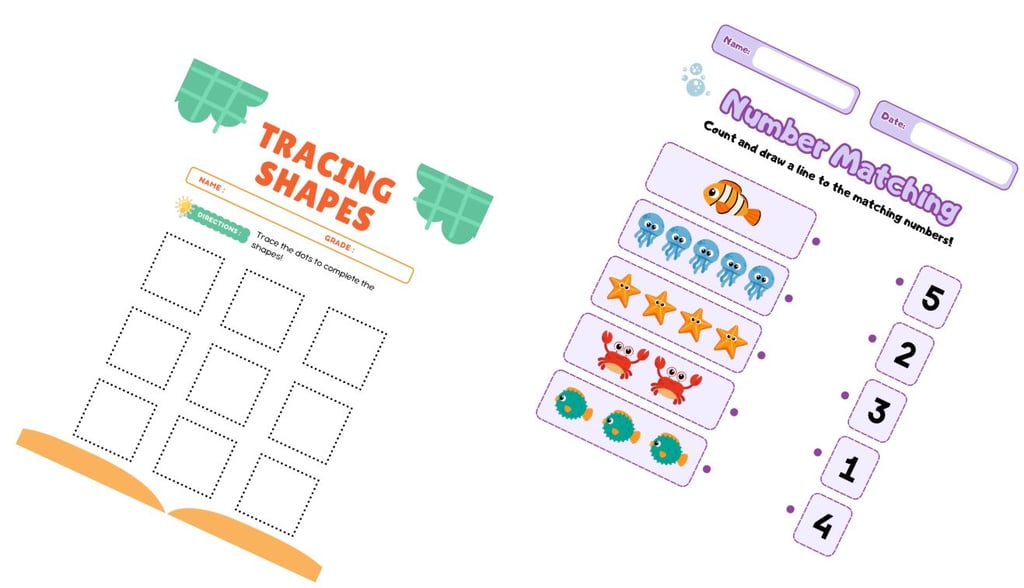
Sam is socially confident. He has good friendships, handles disappointment, and enjoys school socially. But in 3rd grade, he’s reading and doing math like an average 1st grader. His parents notice, and they use personalized, fun worksheets (like those from Giggles Fun Learning) to help him bridge the gap. Over time, Sam improves academically while preserving his confidence.
Riley is academically brilliant. At 3rd grade, she’s reading at a 5th-grade level, solving advanced problems. But socially she struggles: anxiety in new settings, difficulty interpreting jokes or body language, often socially isolated. Academics come at a heavy emotional cost. Over time, Riley’s anxiety worsens, school feels like a burden, and she resents learning even though she’s capable.
Given enough support, Sam’s academic gap can shrink. But Riley’s emotional distress may lead to deeper issues that impair her ability to function, connect, or enjoy life — despite her academic gifts.
This model mirrors the ethos of Giggles Fun Learning, which emphasizes personalized, engaging worksheets that adapt to each child’s pace and emotional comfort, rather than pushing all kids uniformly. The idea is: learning should build confidence, not anxiety. (Inspired by the tone in their “How Custom Worksheets Boost At-Home Learning” blog.)
Final Judgment
If I absolutely had to choose, I would prefer a child to be socially mature and resilient but academically behind, rather than academically ahead but emotionally fragile. The rationale:
Emotional health is foundational. Without it, academic success is hollow and unsustainable.
Academic gaps can often be remediated, especially with early intervention.
Social-emotional competence supports lifelong success in relationships, adaptability, and mental well-being.
A child who is confident and resilient is more likely to persevere, seek help, and grow academically over time.
That said, the ideal is balance — nurturing both domains simultaneously. If you care for a child in one of these positions, the priority should be supporting their weaker domain (whether academic or emotional) rather than accepting the trade-off permanently.
Connect
© 2026 Giggles Fun Learning. All rights reserved.
Support
letstalk@gigglesfunlearning.com